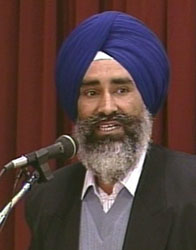
Key facts
- Jaswant Singh Khalra's daughter commented on the film Satluj
- Khalra exposed mass illegal cremations by Punjab Police in the 1990s
- He was abducted and killed by police in 1995
- His case became a landmark in Indian human-rights history
The daughter of slain human rights activist Jaswant Singh Khalra has spoken with striking force about the film Satluj, offering a quote that cuts to the heart of her father's story and the state violence he spent his life exposing. 'After killing so many, one body proved too heavy for the State,' she said — a reference to the fact that her father was himself disappeared and killed after documenting the illegal cremation of thousands of victims of Punjab Police during the insurgency of the 1980s and 1990s.
Jaswant Singh Khalra was a Sikh activist who painstakingly gathered evidence of mass illegal cremations carried out by Punjab Police on the bodies of those killed in extrajudicial encounters. His findings were explosive and dangerous, and in 1995 he was abducted by police and subsequently killed. His case became a landmark in Indian human-rights history, eventually leading to findings by the National Human Rights Commission and court proceedings against police officers.
The film Satluj, now in the public conversation, takes its name from the river associated with the region and the events Khalra documented. His daughter's decision to speak about it publicly, and in such arresting terms, signals that the family sees the film as an important act of remembrance and, perhaps, justice.
For a general Indian audience, particularly younger viewers unfamiliar with this period of Punjab's history, the film and the family's endorsement represent an opportunity to reckon with a chapter that official narratives have often minimised or ignored entirely.